

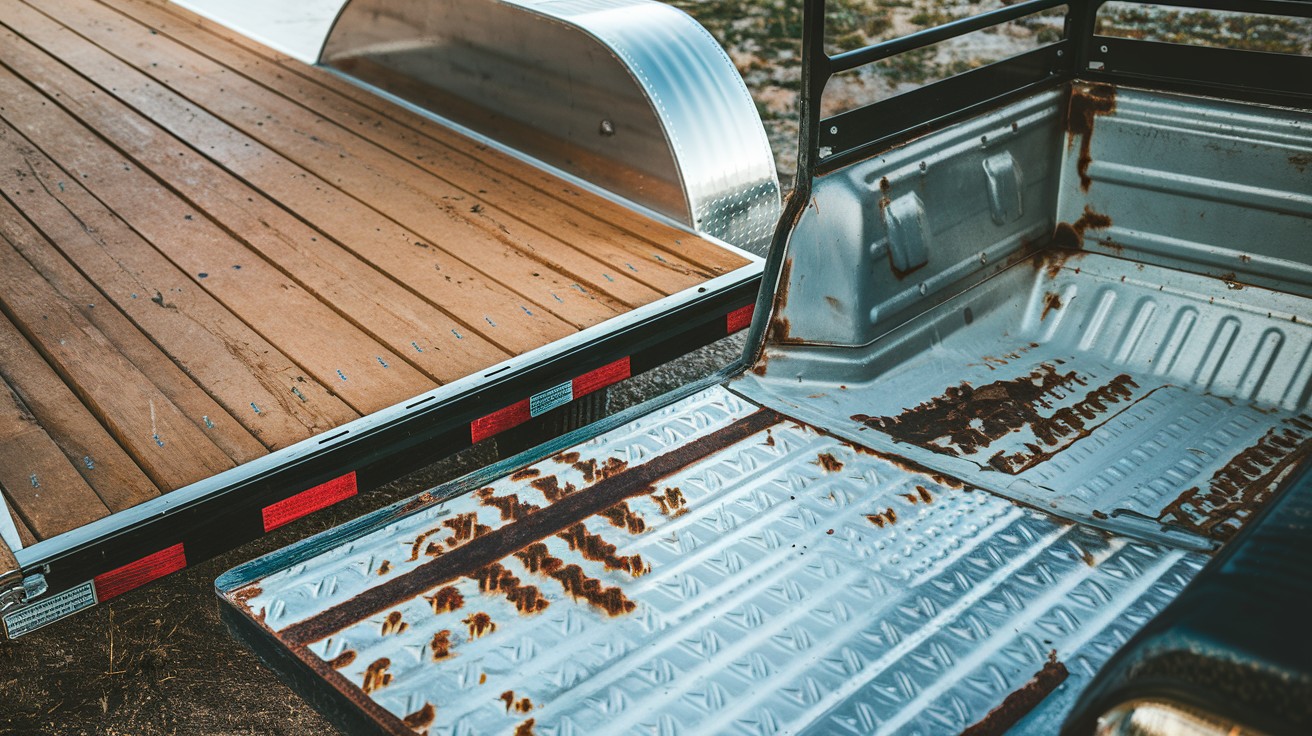
Anyone who has a trailer or utility vehicle knows that the floor takes a beating. Between loads, moisture exposure, tools dropped, and whatever you’re hauling for the week, the floor is under attack from day one. The question isn’t if your floor will give up the ghost, but when – and what can you replace it with to ensure that it will actually last?
The common trailer floors consist of plywood or some cheap timber. At first glance, they look appealing. But by year two, the wood has absorbed moisture, rotted out, or become soft due to water intrusion. At best, you’ll have to deal with a few soft spots; at worst your floor will fail entirely. However, with more conscientious material options, this isn’t the case.
Why Timber Floors are Not the Best Option
Timber seems like the reasonable option since it’s what trailers come with. It’s cheap, easy to work with and does the job – until it doesn’t. The major concern is that timber does not stand up to moisture. Whether it’s rain, spilled liquids or condensation due to temperature changes over time, wood doesn’t fare well as flooring materials.
Even treated timber floors are no exception. Timber can be treated for a while but ultimately, continuous exposure to wetness is going to win out in the end. Furthermore, when you put weight on top of it, your trailer will floor compress from whatever you’re hauling – wood weighs down over time, becomes weaker and ultimately needs replacement sooner than expected.
There’s also the maintenance issue. Timber needs to be sealed, assessed for rot spots and sections need to be replaced if they are damaged. If you have a work trailer that’s continuously used, the maintenance becomes rather burdensome rather than a one-time replacement.
Metal Flooring Choices That Actually Work
Metal flooring eliminates most of these problems instantaneously. For one, it does not rot, succumbs to moisture without degrading performance and it does not compress with weight. But, not all metal flooring is created equally – certain metals perform better than others.
Chequer plate is known as the go-to product for serious trailer and utility vehicle applications. Whether you call it checker plate or diamond plate, the raised surface is not merely aesthetic; it creates grip when wet – which is often when you’re loading or unloading your vehicle. Additionally, that texture prevents items from shifting when in movement.
Thickness matters here. Thin gauge metal exists for cheap but flexes under weight and dents easily. For those who utilize their trailers often,heavy-duty aluminium chequer plate for flooring applications provides strength without sacrificing weight value when compared to steel for trailers that seek to limit heavy weight application. Every kilogram your floor weighs serves against your payload capacity; thus this matters more than most people realize.
The Weight Issue No One Talks About
This might surprise some people – but excess floor weight reduces how much you’re legally allowed to haul. Generally speaking, vehicles have max load ratings – and guess what? The floor plays a part in that equation. Therefore, if you have a heavy steel floor, it cuts into how much you can actually haul.
Aluminium is understood as the best metal because of its weight capacity; it’s approx half the weight of steel but retains the same strength value per square inch as steel. Therefore, if someone is continuously close to the weight maximum of their trailer, changing to aluminium flooring will allow them to actually haul more.
Furthermore, for work vehicles where payload matters most so productivity increases are seen, lighter floors make sense so more equipment can be loaded rather than returned for multiple trips after having flooring systems replaced sooner than expected.
Moisture and Corrosion
Moisture happens; there’s no denying it with trailers or utility vehicles. Whether it’s rain moisture from the atmosphere or washdown efforts or even condensation from temperature variances, eventually the floor will get wet. The question remains – what will happen to it when it does?
Steel will work but it needs moisture protection like no tomorrow. Galvanized steel helps but any impact will expose raw metal which will rust. If trailers are stored outside during winter months or coastal regions, those are constant concern.
Aluminium does not succumb to corrosion as easily as steel does. Aluminium possesses a natural oxide layer which protects from degradation which means that scratches and surface adjustments will not lead to rusting issues that spread throughout the flooring system down the road.
Sealing edges and joints are relatively easy with either option; just a bead of sealant along any seam prevents water from making its way underneath where frame-related issues occur.
Installation Considerations
Metal application isn’t difficult but there are considerations to make before installing them. For one, the existing frame needs to be sound; bolting heavy-duty flooring materials to weak or rusted frames just shifts a problem elsewhere.
In addition, most people can do it themselves with only basic tools (just have an extra person around for positioning effort). Fastening matters too; through-bolts create a stronger connection into the frame than rivets which make adjustments difficult later on down the line. Self-tapping screws have no clamping force relative through-bolts so installers should be mindful of their fastening choices.
Cost Reality and Long-Term Value
Cost of metal exceeds cost of timber; there is no denying this. A timber floor replacement could run hundreds of dollars in materials alone; quality chequer plate metal flooring could be double or triple the price based on measurements and thickness.
However, this math changes over time. Timber floors might be good for two years max applications before replacement; quality metal applications should theoretically last ten years minimum with little maintenance – the lifetime of a trailer in its tenure equals lower cost of metal flooring due to repeated timber replacements.
In addition – insurance costs may differ based onwear-and-tear situations yet two projects out-of-service for a day are worse than one project out-of-service for multiple days during maintenance of replacements.
When Upgrading Makes Sense – or Not
Not every old floor needs replacing. Sometimes parts are fine but surfaces are shot. In this situation replacing over top – overlaying new flooring materials onto existing structures – works well and are cheaper than starting from scratch.
However, if the frame itself is damaged or corroded – might as well bite the bullet now before pieces become an extensive patch job down the road. It’s critical to assess whether everything needs addressed all at once or if it’s better to deal with flooring repairs now and frame replacements later (although sometimes it’s better just to take care of everything at once).
Making the Right Choice For Your Situation
The best situation depends on usage patterns over time. If light use at sporadic times only occurs, treated timber makes sense as cost-efficient options.
If continued commercial-grade demands exist – continuous heavy use in moist conditions makes metal flooring a non-negotiable solution.
Think about anticipated loads too – anything with sharp edges concentrated points warrants heavier duty flooring than moving boxes or lighter-based items; determine what’s going to get experienced abuse and match material type instead of trying save money up front.
Storage conditions matter too – those outside versus those inside devoid of weather exposure lessens problems down the road. If it’s going to live outdoors constantly – better safe than sorry investing in replacements that can’t handle corrosion than those options that play it safe with moisture exposure.
Ultimately, it’s about having a floor that works now – and in five years without constant attention due due unrecommended material selections from the onset.
