

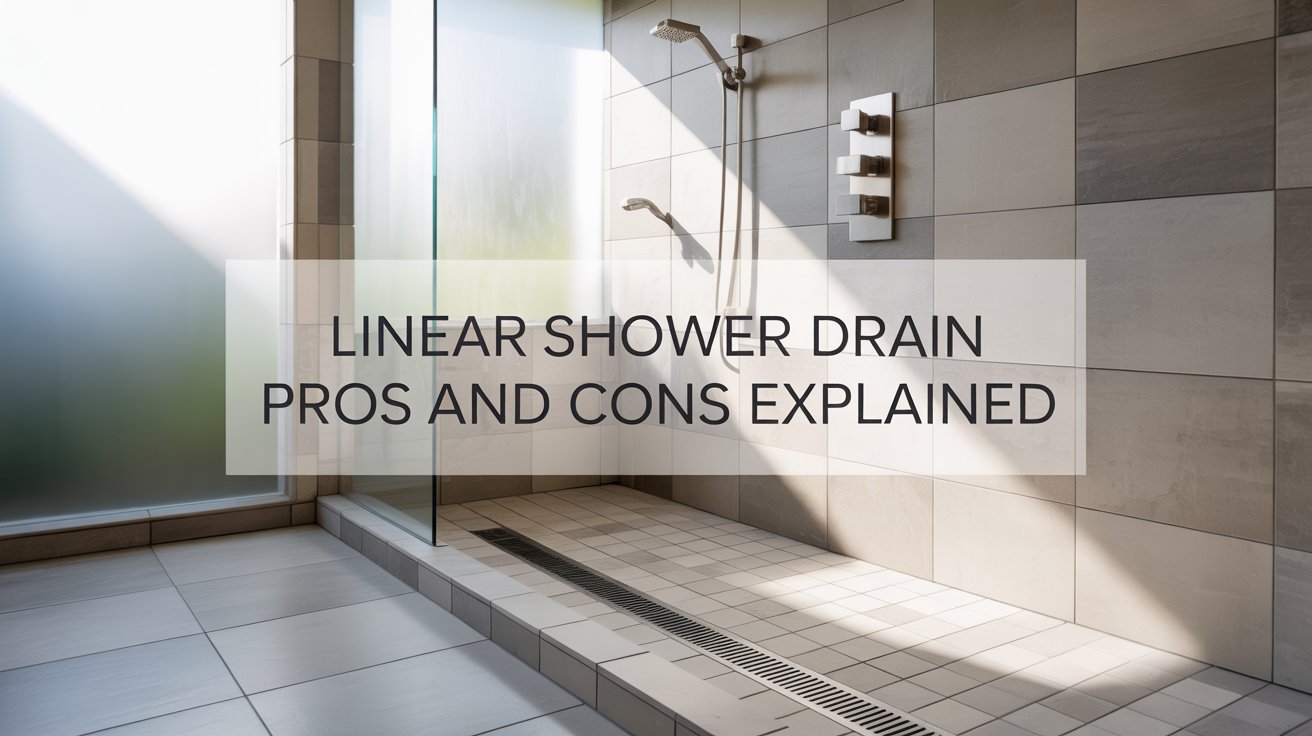
Linear shower drain pros and cons: honest costs, installation tips, and maintenance facts to help you decide.
Linear Shower Drain Pros and Cons Explained
I’ve assisted numerous homeowners in selecting the ideal shower drain, and I can attest that it’s more difficult than you might imagine.
Is a linear shower drain the best choice for your bathroom, despite the fact that it looks fantastic in pictures?
Everything you need to know will be covered in this guide.
We will discuss these drains, their benefits and drawbacks, how they stack up against conventional drains, and things to think about before making a purchase.
I want to provide you with accurate and honest information so you can make your own judgment. No bullshit, just honest conversation. Let’s begin.
What Is a Linear Shower Drain?
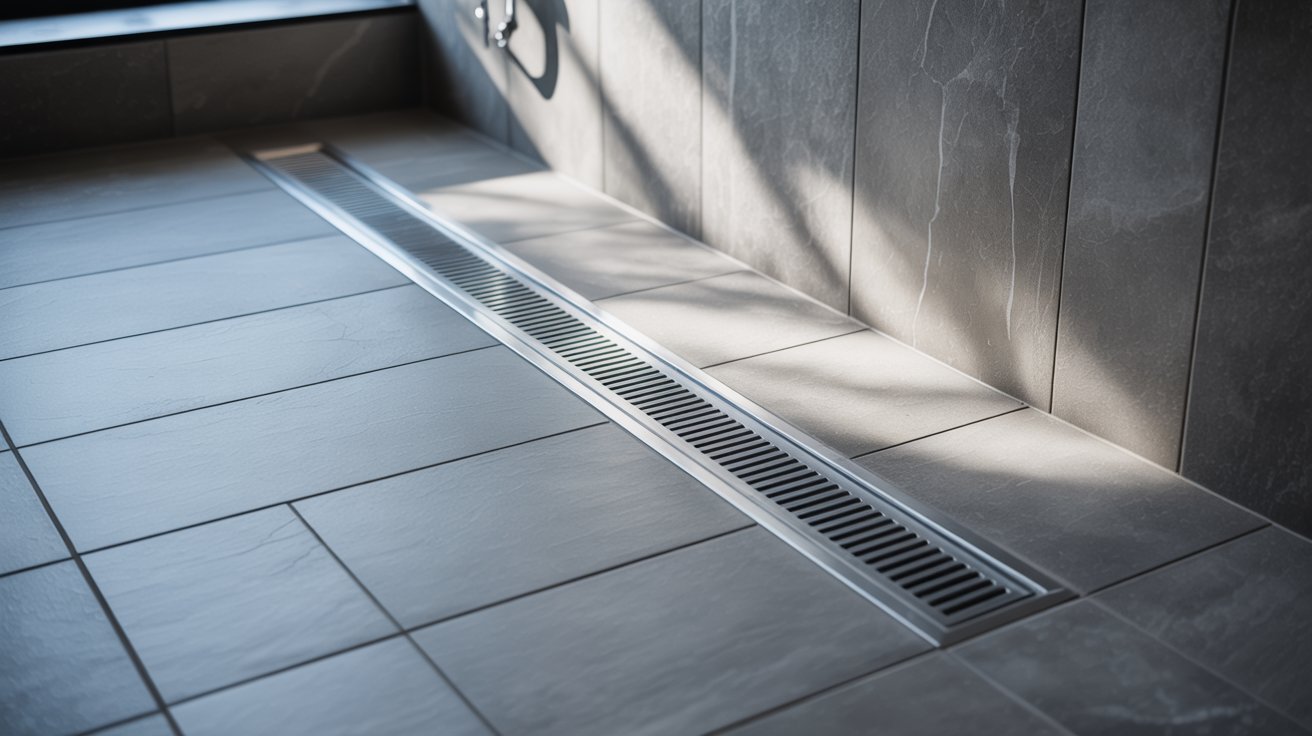
A linear drain is a long, narrow channel that sits along your shower edge or wall.
Think of it as a slim rectangle instead of a round center hole. These drains run in a straight line, usually 24 to 48 inches long.
They need the floor to slope in just one direction toward the drain opening.
Definition and Design
Linear drains have a rectangular form that creates a clean, minimal appearance. Most blend right into your tile work.
Some have metal grates in styles like brushed nickel or matte black. Others can be covered with the same tiles as your floor, making them almost invisible.
The design works well with modern bathroom styles without a bulky drain sitting in the middle.
How It Works
Water flows across your shower floor in one direction toward the drain channel. This setup is perfect for walk-in showers with no curb and wet room designs.
Because you only need one slope, you can use larger tiles without complex cutting around a center point. The tiles can run from wall to wall, giving you a smooth, continuous look.
Pros of Linear Shower Drains
Linear drains offer style and function, making them ideal for contemporary bathrooms with accessible designs.
Sleek and Modern Design
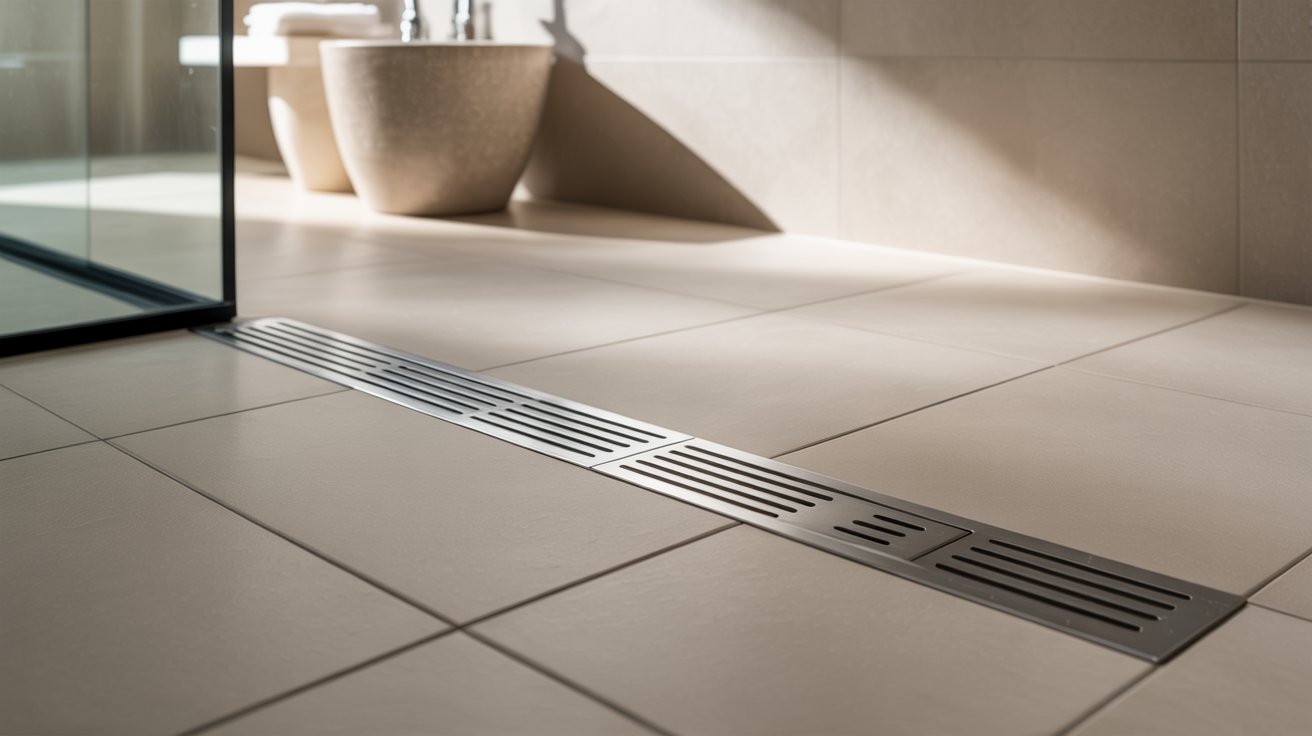
These drains create a clean, unbroken tile surface with smooth lines from end to end. The drain sits quietly along the edge, not demanding attention in the center.
This minimal look fits perfectly with current bathroom trends and makes your space look polished.
Flexible Placement Options
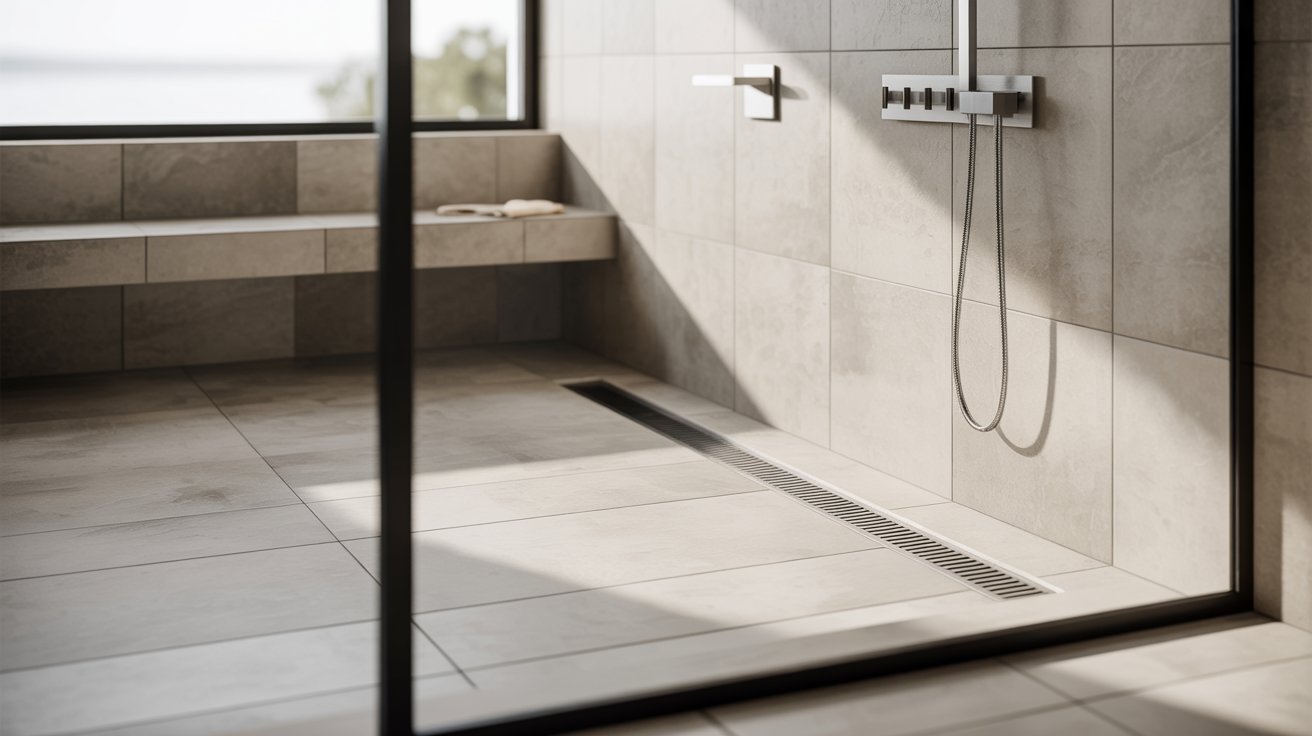
You can install these drains against the back wall, along the threshold, or even in the center if
Needed.
This flexibility helps with unusual shower layouts and makes adding benches easier.
They’re perfect for curbless showers, creating a barrier-free entry while catching all the water effectively.
Easier Use of Large Tiles
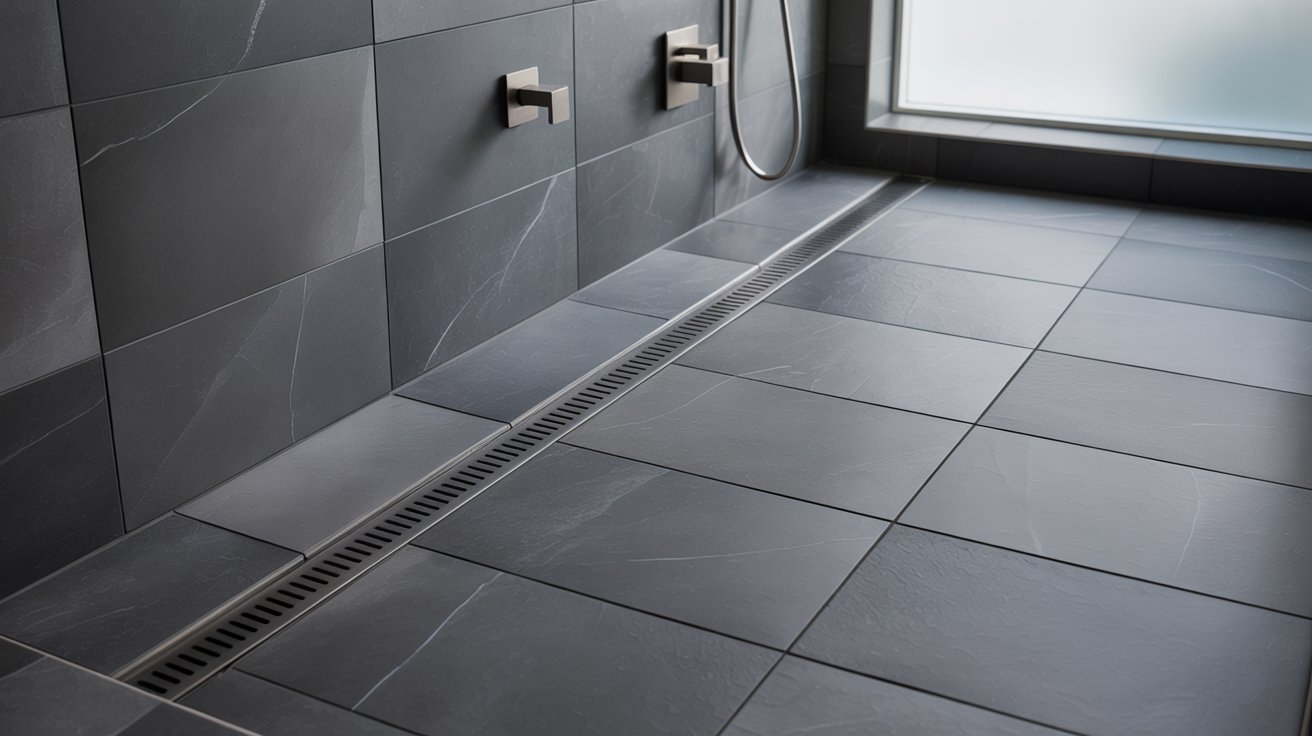
Large-format tiles look great but are tricky to install around traditional round drains. Linear drains solve this problem with their single-direction slope.
Your tiles can be larger with fewer cuts, and the result looks more professional and cohesive with your bathroom floor.
Improved Water Management
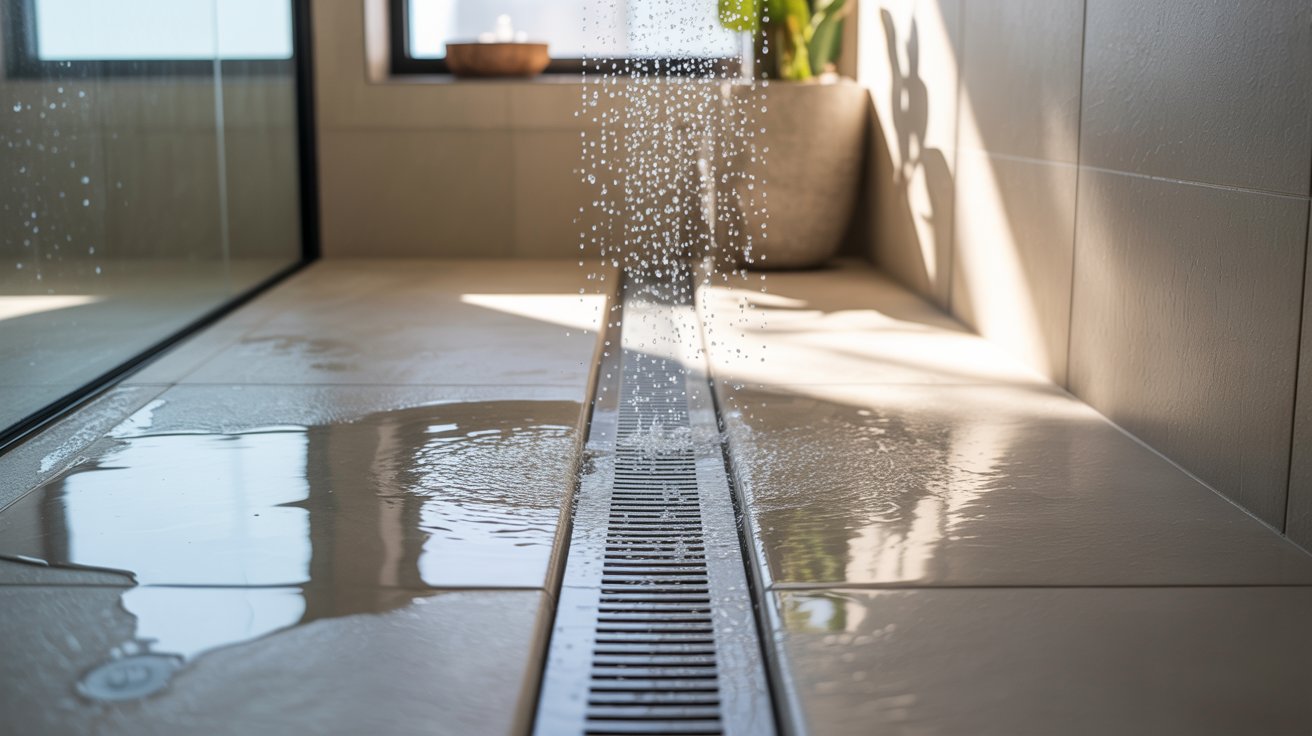
The long channel covers more area than a small center drain, so water doesn’t have to travel as far. This speeds up drainage and reduces pooling.
If you have a rainfall showerhead or multiple shower jets, linear drains handle high water volume better, meaning less standing water and fewer slip risks.
Cons of Linear Shower Drains
Despite their appeal, linear drains cost more, need expert installation, and require regular cleaning to work properly.
Higher Cost
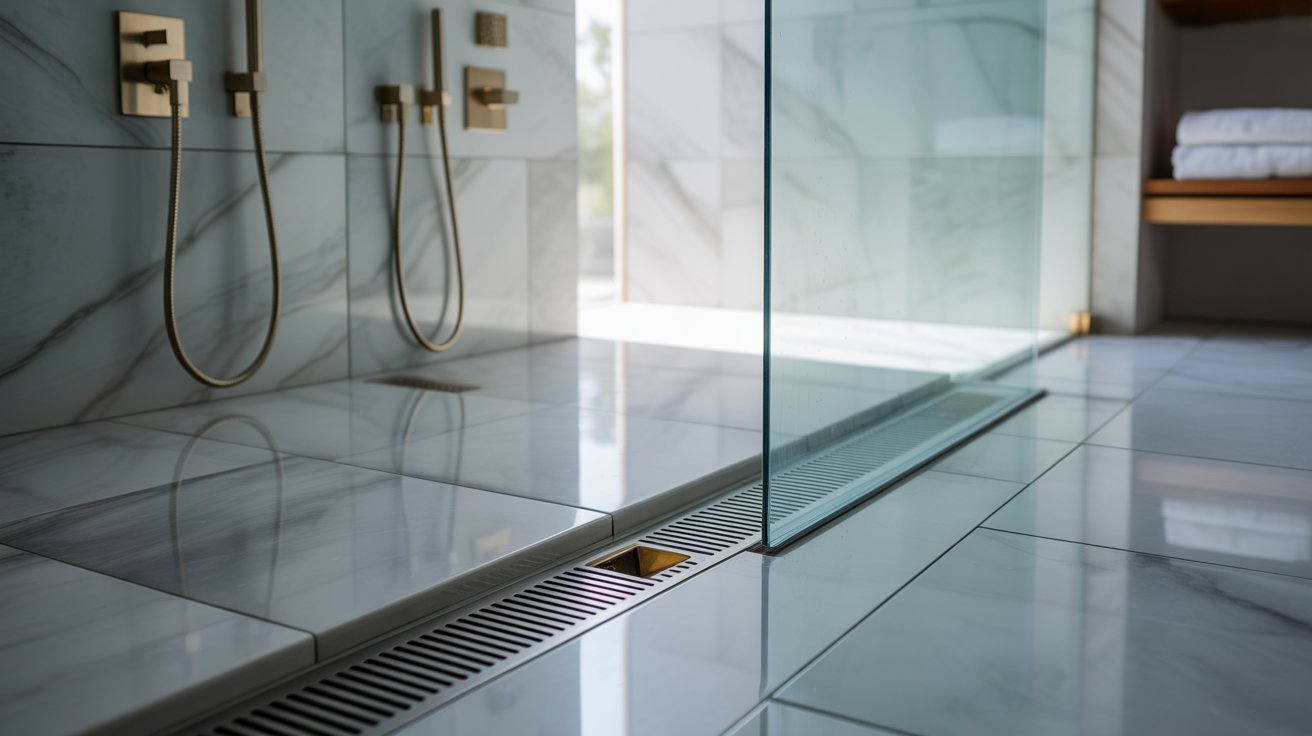
Linear drain units typically cost two to four times more than center drains, often $200 to $500 or more compared to under $100 for traditional drains.
Installation adds to the expense since you’ll probably need a professional with experience.
Your total project budget will increase significantly.
Complex Installation
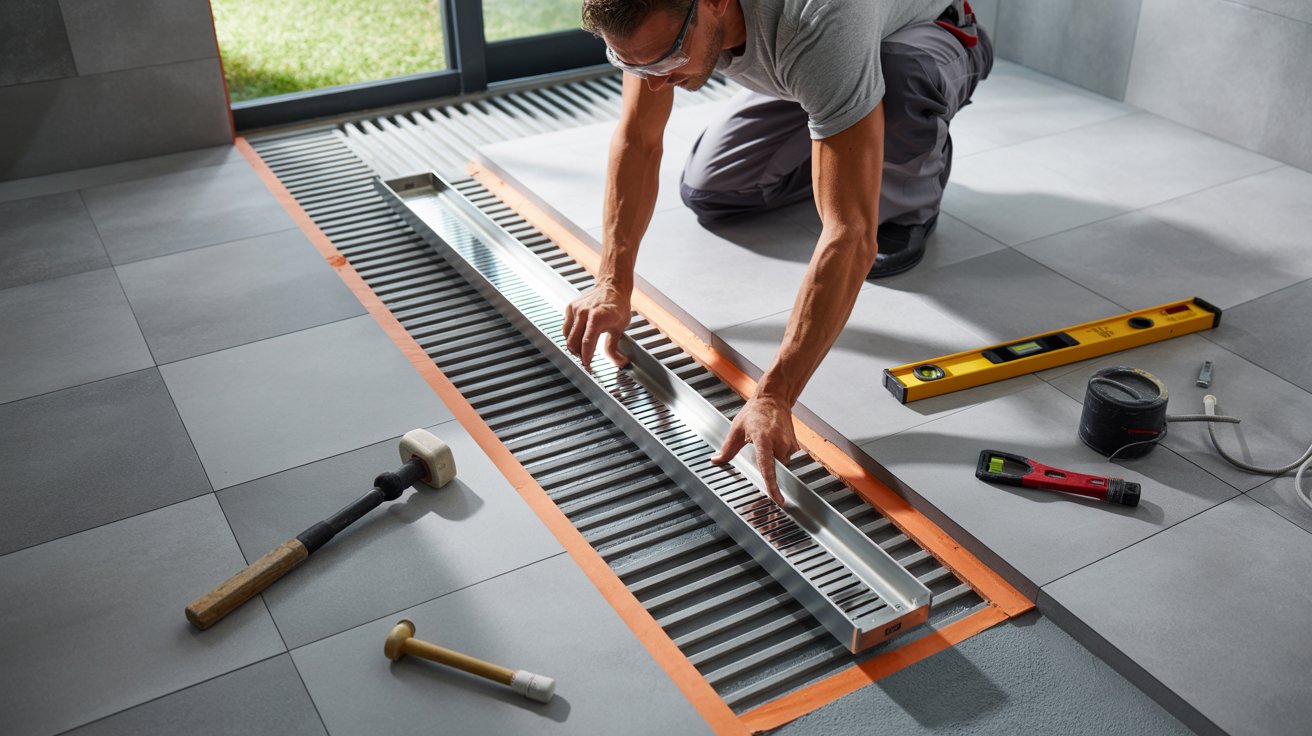
Getting the slope right is critical. If it’s off by even a fraction, water won’t drain properly. The waterproofing must be perfect along the entire drain length. Most DIY homeowners should skip this project.
I’ve seen poorly installed linear drains cause expensive water damage. Hire someone experienced to avoid problems later.
Maintenance Requirements
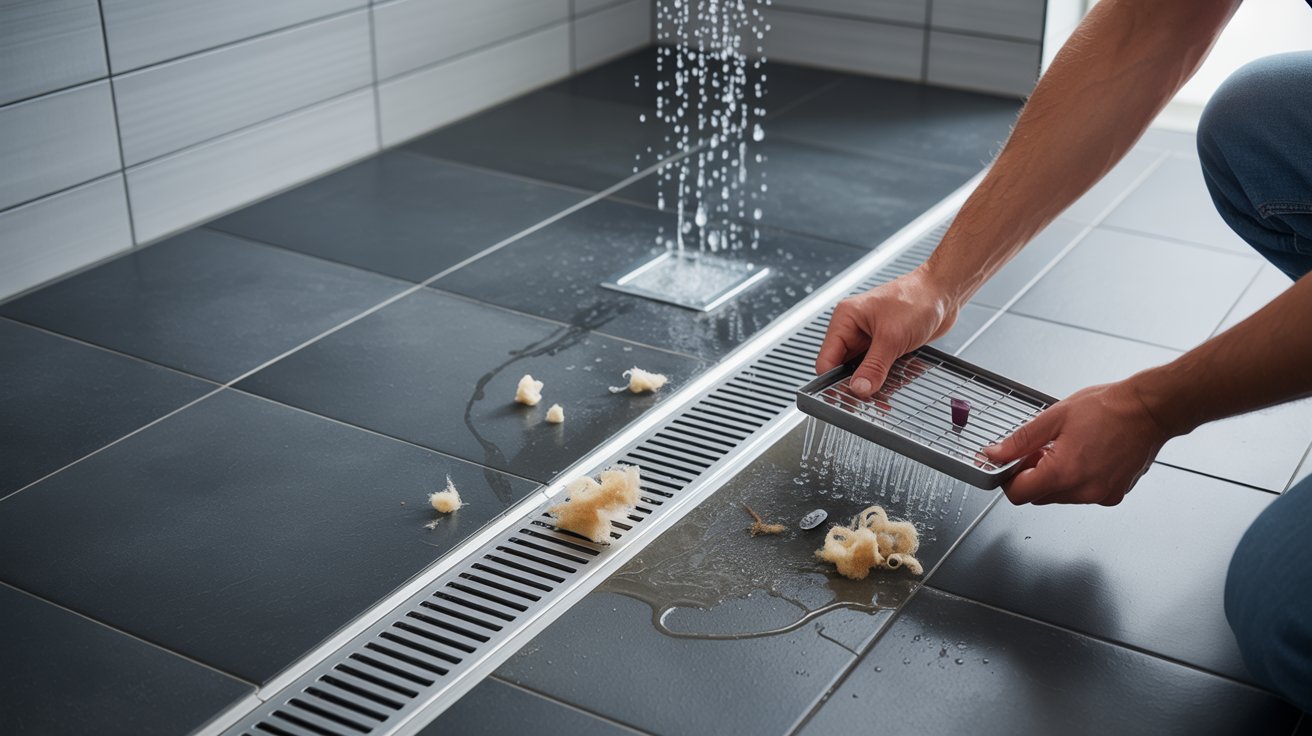
The long channel collects hair, soap, and debris along its entire length.
Cleaning takes more effort than a single drain cover. Some grates are heavy or attached with tiles, making access difficult.
You’ll need to clean regularly, monthly if you have long hair in your household to prevent clogs and slow drainage.
Potential Slower Drainage
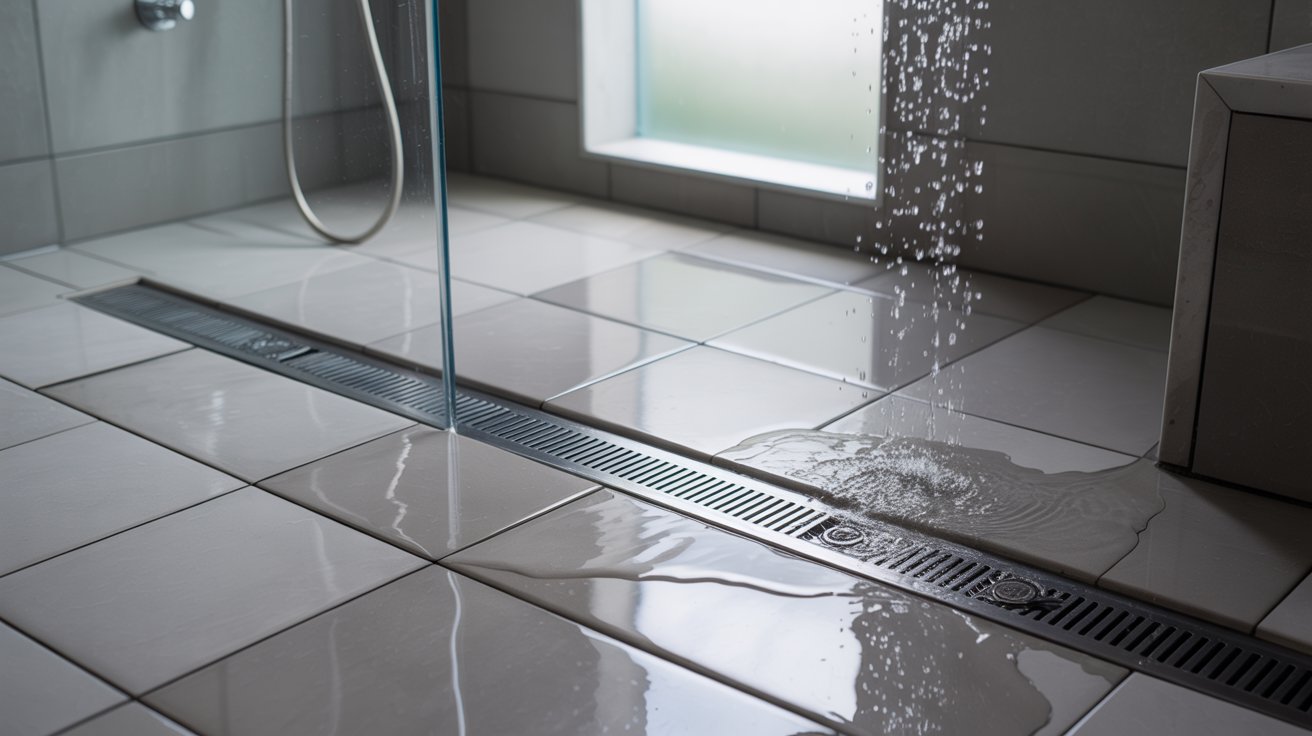
Longer drains can sometimes drain more slowly than center drains. Water has to travel the length of the channel to reach the pipe.
If the slope isn’t perfect, you might see standing water in spots. This isn’t always a problem, but it can happen with cheaper units or improper installation.
Linear vs. Center/Point Drains
Comparing these two drain types helps you understand which fits your space, budget, and style preferences.
Key Differences
Look: Linear drains have a modern, streamlined appearance. Center drains are traditional and functional.
Installation: Linear drains need precise leveling and a single slope. Center drains are simpler with water flowing from all sides.
Tile compatibility: Linear drains work great with large tiles. Center drains require smaller tiles or lots of cuts.
Cost and maintenance: Linear drains are pricier and need frequent cleaning. Center drains are budget-friendly and easier to maintain.
Which Drain Fits Your Needs?
If you want a contemporary look and have the budget, choose a linear drain.
They’re worth it for curbless showers or modern renovations.
If you’re watching costs or want simple maintenance, stick with a center drain. They’re reliable and work well in most standard showers.
For accessible, barrier-free showers, linear drains are usually the better choice.
Tips for Choosing the Right Linear Shower Drain
Before buying, consider your shower size, tile choice, accessibility needs, budget, and who will install it.
- Measure your shower space and decide on drain positioning. Large-format tiles work best with linear drains. Plan the layout carefully before installation.
- Set a realistic budget that includes the drain unit, professional installation, and waterproofing materials. Installation costs often exceed the drain price itself.
- Check the drain’s flow rate to match your showerhead output. This prevents water pooling during showers and keeps everything draining smoothly.
- Think about accessibility and maintenance needs. Curbless designs improve safety. Consider if you’re comfortable cleaning a long channel regularly.
- Choose finishes that match your bathroom fixtures and read brand reviews first. Chrome, brushed nickel, and matte black are popular options.
Conclusion
Three years ago, I had a linear drain installed in my master bathroom, and I adore how tidy it looks every time I enter it.
I clean that drain more often than I thought I would. Style and functionality are combined with linear shower drains, but they require dedication.
Consider your spending limit, upkeep routine, and the installer. You will be pleased with the decision if it meets your needs.
Do you want to share your experience or ask questions? I’d love to know what worked for your bathroom renovation, so please leave a comment below.
Frequently Asked Questions
How long do linear shower drains last?
With proper installation and regular maintenance, linear drains last 15 to 20 years or more. Quality materials and consistent cleaning affect their lifespan significantly.
Can I install a linear drain myself?
It’s not recommended unless you have professional plumbing and waterproofing experience. Improper installation leads to leaks and expensive repairs. Hire a qualified installer for best results.
Do linear drains work with all tile types?
Yes, they work with most tile types and are especially good with large-format tiles. Small mosaic tiles also work fine, though you won’t gain as much benefit from the single-direction slope.
How often should I clean my linear shower drain?
Clean your linear drain every two to four weeks, depending on usage and hair length in your household. Regular cleaning prevents clogs and keeps water flowing smoothly.
Are linear drains better for small bathrooms?
Not necessarily. Linear drains work in small bathrooms but don’t save space. Their main benefits are style and accessibility, not size efficiency. A center drain might be more practical in tight spaces.
